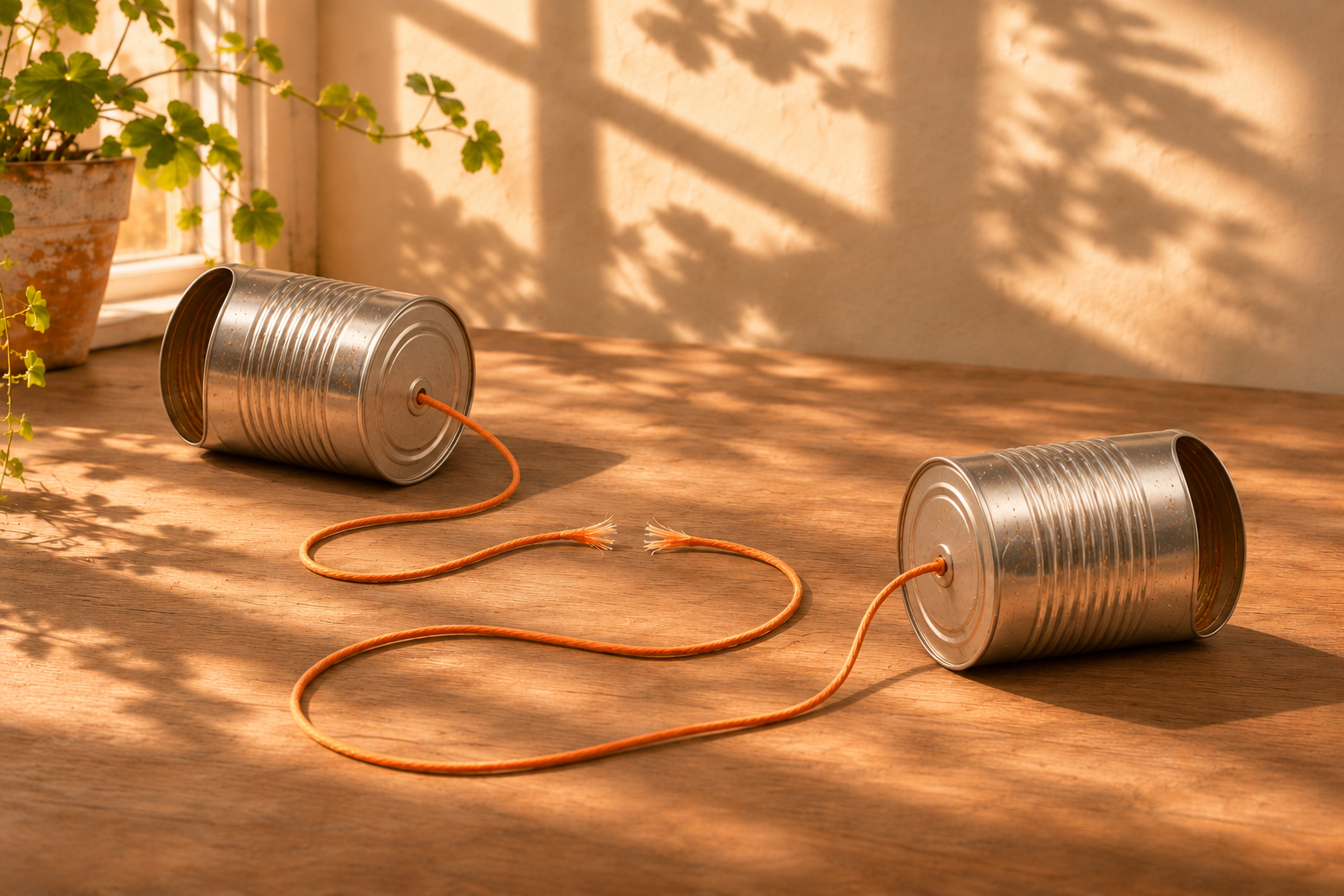
I’ve heard that AI will replace all of us within five years.
Of course, not everyone says five years. Some give us a little longer; others seem to think we might as well start clearing out our desk drawers now.
I listen to podcasts, read articles and try to understand. Some describe extraordinary opportunities. Others warn about everything that could go wrong. And there are questions we need to take seriously. Tasks will change, new roles will be created and some jobs may disappear.
But in the middle of all the talk about what might happen to us in five years, I began to wonder about something else. How much have we already allowed technology to shape the way we work together?
Perhaps we’ve heard this before
When the web began to change our world, there were doomsayers and optimists then too. Some pictured everything that might be lost. Others saw opportunity everywhere.
Looking back, I think it was difficult for anyone to fully imagine how things would actually turn out. Some concerns proved justified. Some opportunities became reality. And much probably happened differently from how any of us had imagined.
Perhaps it’s the same now.
I’m curious about AI. For me, it is interesting to think of the technology as a new kind of expertise to work alongside. It can help me sort through my thoughts, test ideas and sometimes see something from another angle.
But I still need to think for myself. To decide whether what comes back is relevant and correct. To use my experience and understand the people and the context. And sometimes to say, “No, that really didn’t work. Let’s start again.”
I can reveal that it happens.
An unexpected gap in the calendar
This week, parts of Microsoft’s services went down. Outlook and Teams weren’t working as they should, and suddenly the working day looked rather different for many people.
In a news report, people who had decided to go home were interviewed. It was Friday, the sun was shining and Microsoft was down. I had the impression that there were considerably worse ways to end the working week.
I can understand them. An unexpected opening in the calendar and an afternoon in the sun – who would turn that down?
But it also made me wonder. Does a system have to go down before we dare to do something different for a while?
Go home and enjoy the sunshine, by all means. Or, for those who are in the same place, perhaps have a coffee together. Continue a conversation that never quite made it onto the agenda. Draw on a whiteboard, share an experience or ask a colleague to help think through something that has become stuck.
Of course, you can’t replace every task with a cup of coffee and a conversation. Many jobs depend on systems working. But perhaps there are moments when we have more options than we first realise.
Have we forgotten what we can do without the systems?
I think about how much of our work today begins with a screen. We schedule a meeting, send a link, open a presentation and find the shared document. It’s practical. Often it is also essential, especially when we work together across countries and time zones.
But sometimes we may be sitting in the same office, sending a message to someone a few metres away. We schedule a meeting two weeks from now for a conversation that could begin by the coffee machine today.
And I won’t claim to be any better myself. I have even caught myself sending a text to friends to ask if it’s a good time to call. Instead of simply picking up the phone and calling.
When did I start doing that? And what do I actually think will happen if they can’t answer?
Don’t get me wrong. A text can be considerate when we don’t know what the other person is doing. Still, I find it interesting how quickly a new behaviour can become so natural that we barely notice we have changed.
I wonder what that does to our ability to learn from one another.
A conversation can begin with a simple question and take an entirely unexpected direction. Someone explains how she solved a problem, someone else sees a possibility, and suddenly we are building on one another’s thoughts. We may not leave with a finished document, but we may have understood something that helps us make the next decision.
That is work too. And sometimes it may be among the most important work we do together.
A new colleague, but who is at the wheel?
I want to remain curious about AI and what we can achieve alongside technology. I believe it can become a valuable partner, particularly when we use it to test our thinking and open up possibilities.
At the same time, we need to consider how we use it. What do we want help with? When do we need to pause and think for ourselves? And which conversations do we want to have with another person, where experiences, questions and different perspectives can meet?
We may worry that technology will one day take over our jobs. But we can also ask ourselves today where we have allowed it to take over our habits. Not necessarily because anyone forced us, but because it was quick, convenient and gradually became the way we did things.
Perhaps a good place to start is noticing which of those habits we actually want to keep – and which we could change.
So next time you find a gap in your calendar, perhaps have a coffee with a colleague. Ask a question you don’t know the answer to. Or step outside for a while if the sun is shining.
You don’t have to wait for Microsoft to give you permission.
After all, we still have five years before AI takes over. It would be a shame to spend the whole time in our inboxes.
About the Microsoft outage: Reuters, 14 november 2026. This source reports the outage. The news segment mentioned in the article is a separate observation.